Florence Through the Eyes of Writers
Some cities are discovered by walking through them. Others continue to live within the pages of a book. Florence belongs to both.
Some cities are discovered by walking through them. Others continue to live within the pages of a book. Florence belongs to both.
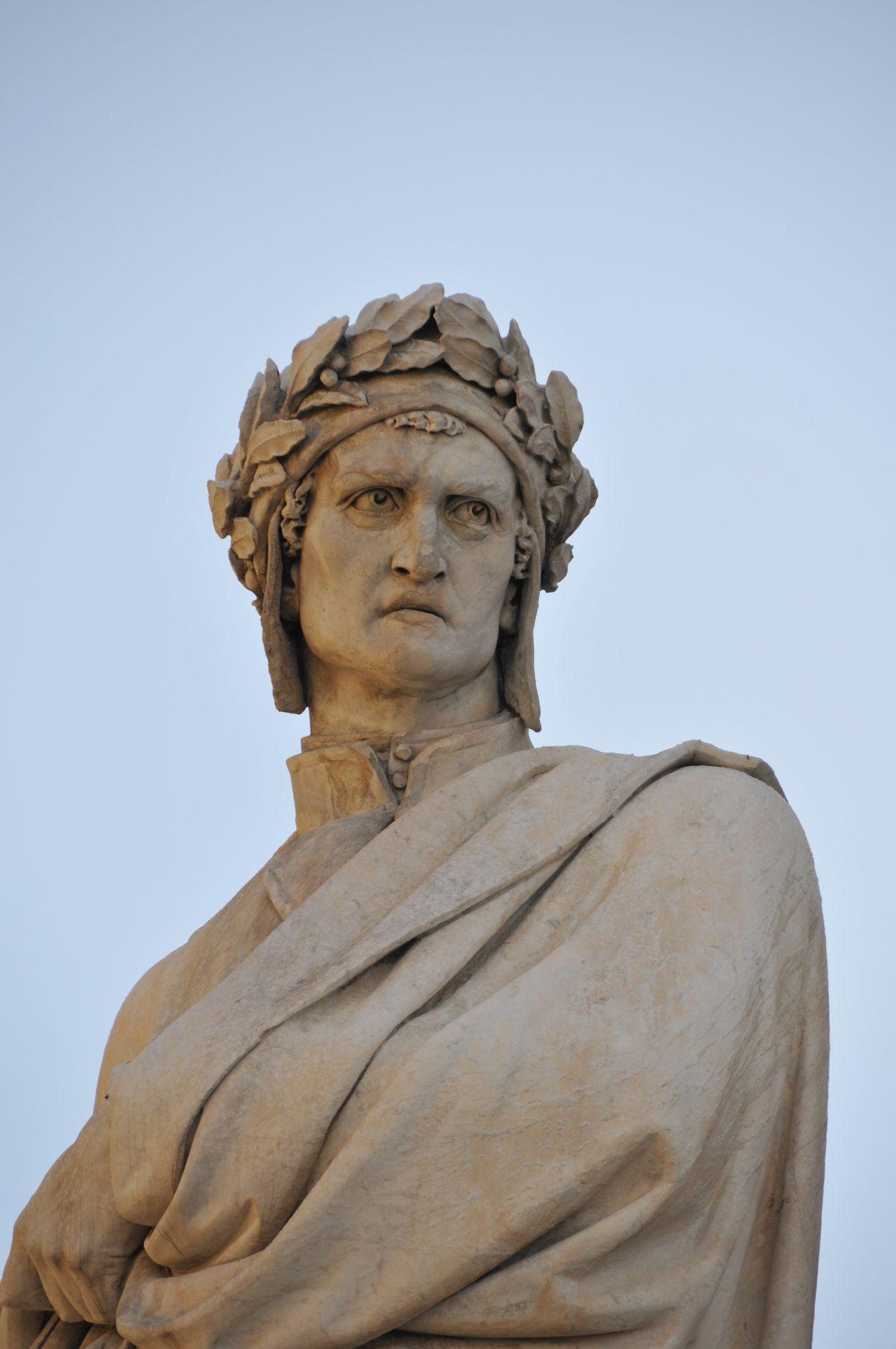
Florence has been portrayed countless times. Through painting, architecture, photography and the memories of those who have called it home. Yet there is another Florence, one made of words, preserved in novels, poems, letters and diaries written by those who have experienced it.
For Dante, it was a city of belonging and exile. For nineteenth-century travellers, an encounter with beauty and history. For twentieth-century writers, a place where everyday life could become the subject of literature.
Discovering literary Florence means following these different perspectives, allowing the written word to reveal new dimensions of familiar streets, squares and palaces.
It is a journey that does not necessarily require a map. Sometimes, a book is all you need.
No writer is more closely connected to Florence's identity than Dante Alighieri.
The medieval city where he was born in 1265 was very different from the Florence we know today. Towers, narrow streets, churches and the homes of powerful families shaped its urban landscape, while political tensions profoundly influenced everyday life.
Dante's exile in 1302 transformed Florence into a constant and painful presence in his writing. In the Divine Comedy, the city reappears through characters, memories, conflicts and judgements that reveal his intense and often contradictory relationship with his homeland.
Even today, traces of Dante's Florence can be found around the medieval district associated with the poet, the Church of Santa Margherita dei Cerchi, the Baptistery and the narrow streets of the historic centre.
Walking through these places means encountering a city that continues to exist through the words of someone who was forced to leave it behind.
If Dante portrays a Florence shaped by politics, memory and exile, Giovanni Boccaccio reveals a profoundly human dimension of the city.
In the Decameron, the plague of 1348 provides the setting for one of the most important works of European literature. Ten young people leave Florence to seek refuge in the countryside, where storytelling becomes a way of giving structure to time and confronting uncertainty.
The city remains in the background, yet its presence is essential: a place of encounters, trade, passions, contradictions and social relationships.
Reading Boccaccio today allows us to imagine a Florence beyond its great monuments. A city inhabited by people, shaped by everyday gestures and stories that transcend their own time.
Perhaps this is one of literature's most fascinating qualities: its ability to bring life back to places that history has transformed into monuments.
Between the nineteenth and twentieth centuries, Florence became a favourite destination for writers, poets and intellectuals from across Europe.
For many, it was more than a stop on the Grand Tour. It was a city in which to settle, live and discover a new perspective on the world.
The English poet Elizabeth Barrett Browning lived with her husband Robert Browning at Casa Guidi, in the Oltrarno district. Their former residence, now preserved as a house museum, reflects their deep connection with Florence, which Elizabeth also celebrated in her poem Casa Guidi Windows.
Another vision of the city emerges in E. M. Forster's novel A Room with a View. Published in 1908, it tells the story of a young Englishwoman travelling through Italy, for whom Florence becomes the setting of a profound personal transformation.
The city is not simply a beautiful backdrop. It becomes an invitation to question conventions, embrace the unexpected and imagine a different way of living.
Through these writers, Florence reveals a distinctive quality: its ability to appear different depending on who is looking at it.
The Florence of writers lives not only in books, but also in the places where authors once gathered.
Between the late nineteenth century and the early decades of the twentieth, cafés in the historic centre became spaces for intellectual exchange, debate and cultural experimentation.
The most famous was Caffè delle Giubbe Rosse, in Piazza della Repubblica, frequented by writers and intellectuals including Giovanni Papini, Ardengo Soffici, Aldo Palazzeschi, Eugenio Montale and many others. Around its tables, literary journals were conceived, artistic movements exchanged ideas, and some of the most vibrant cultural discussions of twentieth-century Italy took shape.
A short walk away, the Gabinetto Scientifico Letterario G.P. Vieusseux, founded in 1819 and now housed in Palazzo Strozzi, represents another important chapter in Florence's intellectual history.
Originally established as a place for reading and cultural exchange, it welcomed figures such as Giacomo Leopardi and Alessandro Manzoni during their time in the city.
These places reveal a Florence where literature was not merely a solitary pursuit, but an ongoing conversation between people, ideas and different ways of seeing the world.
In the twentieth century, Florence continued to play a central role in literature, although the way writers portrayed the city began to change.
Alongside its monumental identity emerged the Florence of working-class neighbourhoods, families, trades and social transformation.
In the novels of Vasco Pratolini, Florence becomes a living presence. Works such as Cronache di poveri amanti (Chronicle of Poor Lovers) and Metello portray a city shaped by relationships, conflicts, solidarity and everyday life.
Its streets are no longer simply places to admire, but spaces inhabited by ordinary people and their stories.
This perspective complements that of the great writers of earlier centuries. Florence is not only the city of Dante and the Renaissance, but also a place in constant transformation, where every generation leaves behind its own memories.
Following a literary itinerary in Florence means travelling through centuries of history without venturing far from the historic centre.
You might begin in Dante's neighbourhood, among medieval streets and the Baptistery, before continuing towards Piazza della Repubblica and imagining the conversations that once animated its literary cafés.
From here, Palazzo Strozzi introduces the tradition of the Gabinetto Vieusseux and the encounters between European intellectuals during the nineteenth century.
Crossing the Arno, the itinerary continues into the Oltrarno, towards Casa Guidi, where the Brownings' private lives and literary work became intertwined with the history of the city.
There is no need to visit every place in a single day. Part of the pleasure lies in the freedom to pause, step inside a bookshop or sit down to read a few pages.
Because perhaps the most rewarding way to discover the Florence of writers is to allow the books themselves to suggest the route.
In the heart of the historic centre, Palazzo Ruspoli offers a personal way of discovering literary Florence.
Dante's neighbourhood, Piazza della Repubblica, Palazzo Strozzi and many of the places connected to Florence's cultural history are just a short walk from the residence.
A walk can become an encounter with a writer. A square may recall the pages of a novel. A quiet moment in the privacy of your residence can offer the opportunity to return to a book and rediscover, between its lines, the very places you have just explored.
It is a way of experiencing Florence that leaves room for curiosity, discovery and the pleasure of not always having a particular destination in mind.
Because some cities remain in our memories for what we have seen. Others, like Florence, also remain with us through the stories they have taught us to imagine.
Be inspired by our curated recommendations and discover remarkable places, itineraries and experiences selected to help you explore Florence through literature and the perspectives of those who have written about it.