Autumn in Florence: A City for Thinkers
Some cities invite you to see. Florence, in autumn, also invites you to think.
Some cities invite you to see. Florence, in autumn, also invites you to think.
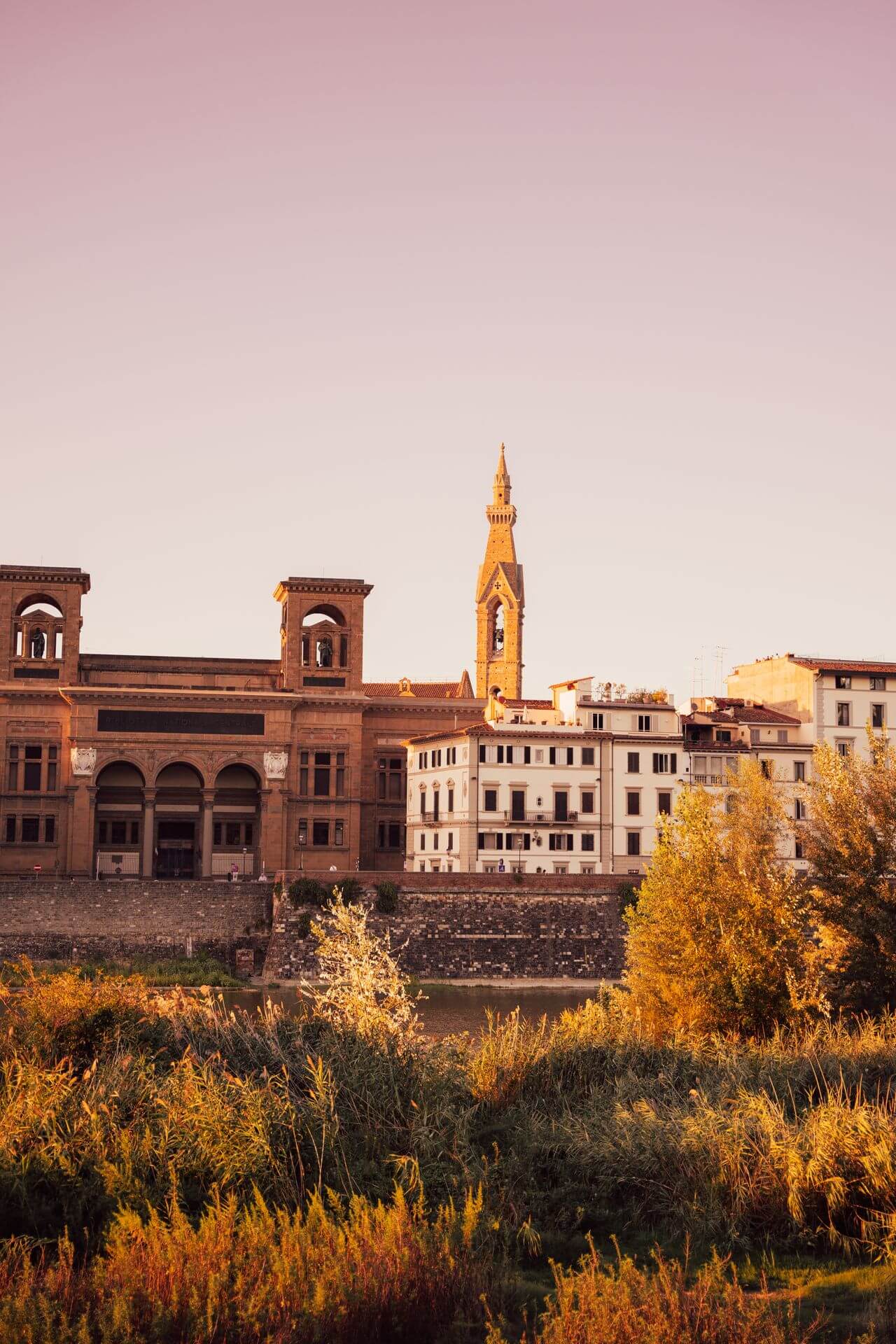
As the summer light begins to soften and the days slowly grow shorter, Florence changes its rhythm. Stone façades take on deeper tones, gardens turn to the colours of the new season, and spending a few hours inside a museum, a library or a café once again becomes a natural part of the day.
Florence in autumn seems to ask you to slow down.
Perhaps this is the ideal season to rediscover a side of the city that can easily go unnoticed when trying to see everything: its connection with thought and reflection. Florence is not only a city of masterpieces to admire, but a place that for centuries has welcomed artists, writers, philosophers, scientists and intellectuals, where culture and everyday life continue to meet.
Walking through Florence means passing through places where some of the ideas that transformed European culture first took shape.
Humanism, the Renaissance, the rediscovery of antiquity, artistic and scientific experimentation: the city preserves the traces of periods when observing the world also meant trying to understand it.
In autumn, this dimension seems to become even more apparent. You can enter a church without planning the visit, spend time contemplating a work of art, cross a quiet cloister or simply sit in a square and allow the architecture itself to suggest a question.
Florence does not necessarily need to be explored quickly. Some of its most remarkable places ask for exactly the opposite.
To discover the Florence of ideas, it is worth stepping inside its libraries.
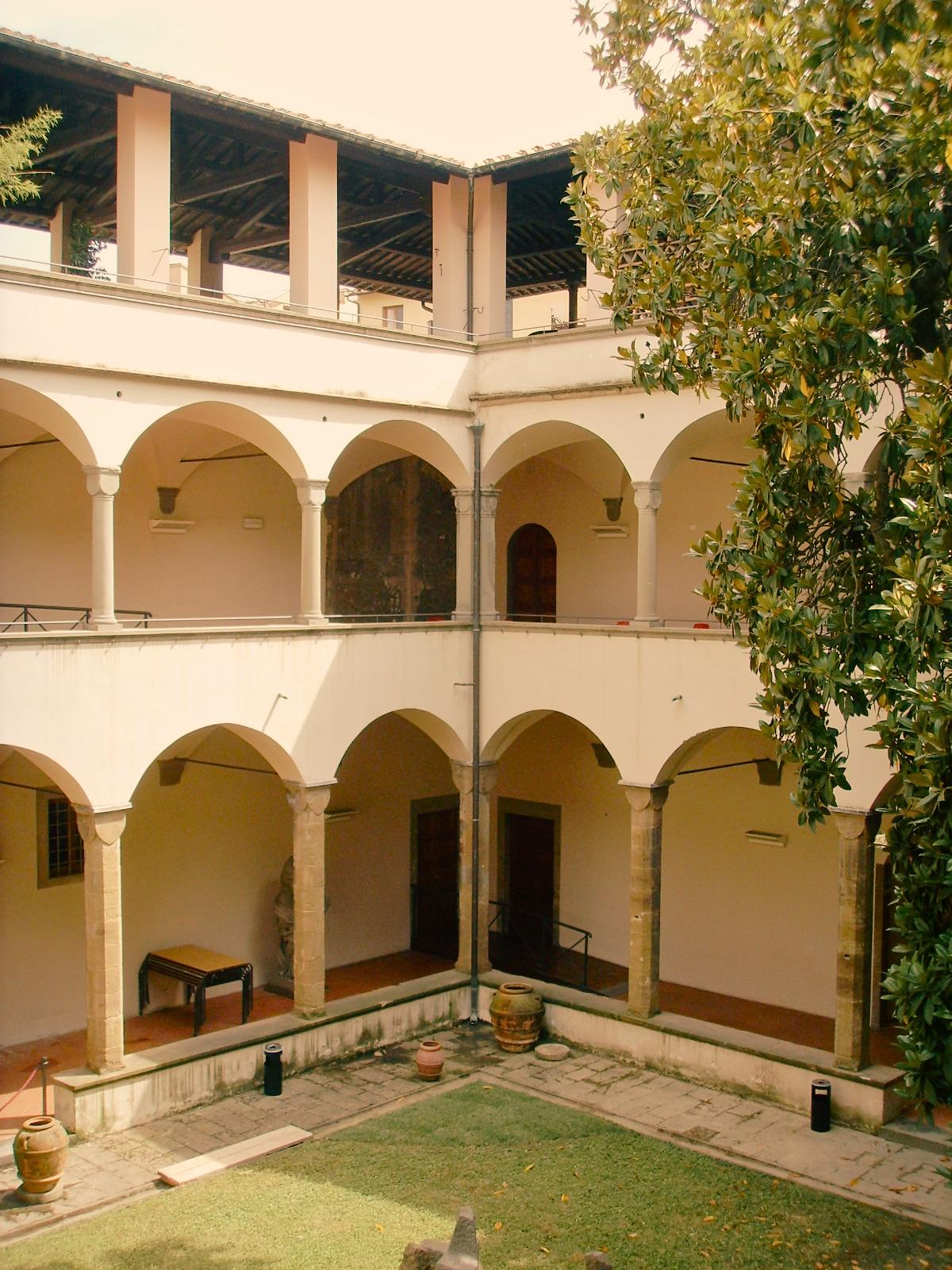
Just a short walk from the Duomo, the Biblioteca delle Oblate occupies a historic complex whose origins date back to the 13th century. Its cloister and panoramic terrace make it a particularly evocative place: a space devoted to reading where, simply by looking up from the page, you find Florence before you.
Then there is the Gabinetto Scientifico Letterario G.P. Vieusseux, founded in 1819 and now housed in Palazzo Strozzi. During the 19th century, it became an important meeting point between Italian and European culture, welcoming figures such as Giacomo Leopardi and Alessandro Manzoni. Today, it continues to promote lectures, events and cultural activities.
These places are a reminder that reading, exchanging ideas and discussing culture have been part of Florentine life for centuries.
Visiting Florence in autumn also offers an opportunity to change the way you experience its museums.
There is no need to devote an entire day to a major collection. You might choose a single room, an artist or a particular period. Spend more time with fewer works.
Beyond the Uffizi and the Accademia, Florence's cultural landscape includes institutions and collections of a very different character. Museo Novecento, Museo degli Innocenti, Palazzo Medici Riccardi, the Museum of San Marco and many other places allow you to create a personal journey through different centuries.
Autumn 2026 also confirms the vitality of Florence's cultural scene, with exhibitions and events continuing well beyond the summer months.
Once again, the privilege lies in being able to choose. And in giving yourself time to look.
Thought does not belong only to indoor spaces.
A walk without a particular destination can be one of the most rewarding ways to experience Florence in autumn. Crossing the Arno, wandering through the Oltrarno, following a road towards the hills or simply moving away from the city's busiest squares for a few hours reveals another dimension of Florence.
The landscape changes too. At the Cascine, the Giardino dell'Orticoltura, the gardens of Villa il Ventaglio and across the hills surrounding Florence, autumn foliage accompanies the gradual transition towards winter.
Walking becomes a way of observing. And in Florence, observing is often the first step towards understanding.
There is also a Florence made of intervals.
A coffee after an exhibition. A few pages of a book. A glass of wine in the late afternoon. A conversation that lasts longer than expected.
These moments may seem secondary, yet they are often when a city stops being simply a destination and begins to feel personal.
Autumn in Florence lends itself naturally to this rhythm. The days invite you to alternate between indoors and outdoors, movement and stillness, discovery and reflection.
Luxury, then, is not about filling every moment. It is about having the freedom to leave some of it unplanned.
In the heart of the historic centre, Palazzo Ruspoli allows you to shape each day without the need to follow a rigid itinerary.
The Duomo is just steps away. Palazzo Strozzi, Piazza della Signoria, libraries, museums and many of the places that define Florence's cultural life can all be reached on foot.
This means stepping out for an exhibition, returning to the quiet of your private residence, picking up a book and then leaving Palazzo Ruspoli once again when the afternoon light suggests a walk.
It is a different way of experiencing Florence, and one that feels particularly natural in autumn.
Because perhaps a city for thinkers is not a city that offers all the answers. It is a city that continues to suggest questions long after you have returned home.
Be inspired by our recommendations and discover libraries, museums, gardens and carefully selected places through which to experience Florence in autumn, surrounded by art, beauty and time.